A Shocking Order Sparks Outrage as Hate Speech Crosses a Dangerous Line
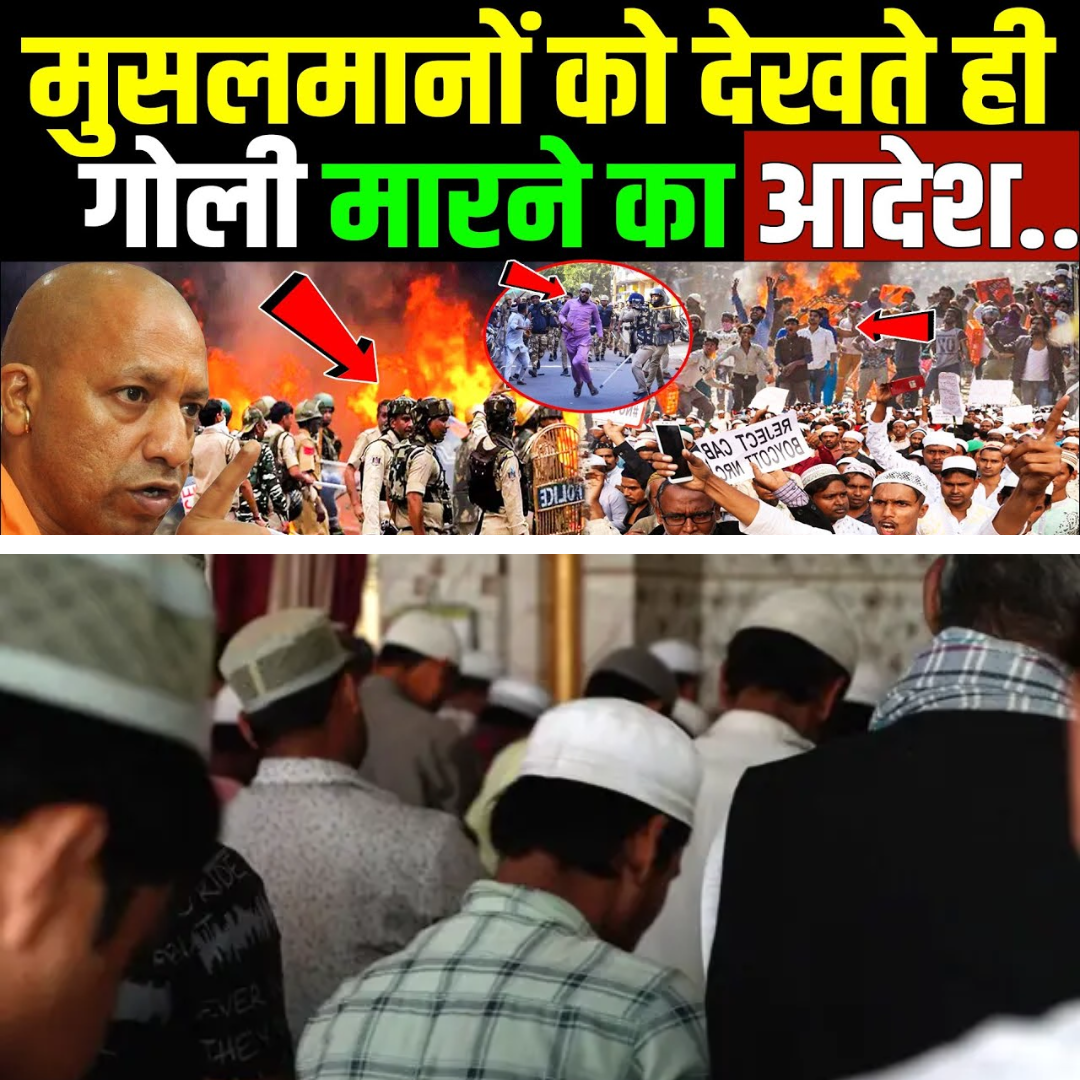
The sentence did not arrive with context or warning. It appeared abruptly, sharp and unforgiving, slicing through timelines and conversations like a blade. “Shoot on sight.” Attached to it was a target. Muslims. In a world already exhausted by conflict and suspicion, the words landed with a weight that was impossible to ignore. For many, it was not just a line of text. It was a reminder of how quickly humanity can slip, how easily language can become a weapon.
Within minutes, fear began to ripple outward. Phones buzzed. Screens refreshed. Parents wondered how to explain this to their children. Young men questioned whether the streets they walked every day had suddenly become more dangerous. Elderly voices recalled darker chapters of history they had hoped would never repeat themselves. The sentence was short, but its shadow was long.
Hate rarely announces itself politely. It does not arrive with footnotes or legal disclaimers. It arrives as certainty. As command. As something that sounds simple enough to follow. That is what made this moment so chilling. Not because violence had already occurred, but because the words themselves seemed to rehearse it. They rehearsed the idea that an entire community could be reduced to a threat, a silhouette, a justification.
For Muslims who read the message, the impact was immediate and deeply personal. It was not abstract politics or distant ideology. It was about the walk to work, the ride on public transport, the knock at the door after dark. Many described a familiar tightening in the chest, a sensation they had learned to recognize over years of watching headlines turn faith into suspicion. Once again, identity had been framed as danger.
Yet the shock did not stop there. Others, from different religions and backgrounds, reacted with the same disbelief. How had such language become so casual, so shareable? When did a call for murder become something that could be forwarded, reposted, or debated as if it were merely an opinion? The line between expression and incitement seemed to blur in real time.
History offers uncomfortable answers. Genocides and massacres rarely begin with mass graves. They begin with words. With slogans that simplify, with orders that dehumanize, with narratives that divide the world into “us” and “them.” The pattern is old, but its power has not faded. What has changed is speed. Today, a sentence can travel across continents in seconds, amplified by algorithms that reward outrage and certainty.
Social media platforms lit up with reactions. Some condemned the message instantly, calling it dangerous and unforgivable. Others questioned its origin, asking whether it was real, exaggerated, or taken out of context. A smaller but louder group attempted to justify it, framing violence as defense, as necessity, as something regrettable but acceptable. It was in those justifications that many found the greatest alarm.
Because hatred does not thrive only on those who shout it. It thrives on those who excuse it.
Experts in conflict studies often warn that the most critical moment is not when violence erupts, but when society first encounters the language that makes violence imaginable. That moment demands clarity. Silence, they argue, is not neutral. It is permissive. Each unchallenged statement lowers the threshold for the next, until what once sounded unthinkable begins to sound familiar.
For journalists, this creates a profound ethical challenge. Reporting the sentence risks spreading it further. Ignoring it risks allowing it to normalize in the dark. The responsibility lies in exposure without amplification, in naming the danger without echoing the hate. It is a delicate balance, and one that defines moments like this.
Community leaders responded with urgency. Mosques increased security. Interfaith groups issued statements of solidarity, reminding the public that faith has never been a crime. Human rights organizations warned that rhetoric like this has real-world consequences, even if no trigger is pulled immediately. They pointed to studies showing spikes in hate crimes following viral extremist content, a grim reminder that words often move faster than prevention.
Behind every public reaction were private conversations. Families debated whether to attend events. Friends checked in on one another with messages that simply asked, “Are you safe?” Teachers wondered how to address the issue in classrooms where children absorb fear even when adults try to hide it. The emotional toll spread quietly, invisibly, but relentlessly.
What makes this moment especially troubling is not that hatred exists. Hatred has always existed. It is that the barriers against expressing it seem to be eroding. Language that once would have been universally condemned now floats in a gray zone of debate. Was it serious? Was it symbolic? Was it just anger? Each question, while sounding reasonable, chips away at the moral clarity that society depends on.
There is also the question of power. Words like these do not emerge in a vacuum. They are shaped by political climates, media narratives, and long-standing prejudices. When leaders fail to challenge bigotry, or worse, mirror it, they lend legitimacy to the extreme. The distance between rhetoric and action narrows.
For Muslims reading that sentence, the fear was real. For the broader society, the test was equally real. How do you respond when a line is crossed so openly? Do you treat it as an anomaly, or as a warning? Do you scroll past, or do you confront what it says about the world you are living in?
This story is not only about a sentence. It is about a moment when language revealed its capacity to harm before any physical act occurred. It is about the fragile space between speech and violence, and how quickly that space can collapse. And it is about the responsibility shared by governments, platforms, media, and individuals to refuse the normalization of blood-soaked words.
Because once a command like that is allowed to linger, unchallenged, it does not disappear. It waits. It waits for the right conditions, the right anger, the right excuse. History has taught us what happens next.
And the question now is whether we have learned enough to stop it before it moves from screen to street.
As the initial shock began to settle, a quieter, more unsettling phase took its place. The sentence was no longer new. It had been seen, processed, and in some corners, absorbed. This is often the most dangerous moment. When outrage cools, attention drifts, and yet the idea remains, lingering in the background like a low hum that refuses to fade.
Authorities issued cautious statements. Words like “investigation,” “context,” and “monitoring” appeared repeatedly. None of them brought immediate comfort. For communities already living with the memory of discrimination, caution sounded too much like hesitation. The fear was not that institutions were unaware, but that awareness might not be enough to prevent what could come next.
Muslim families adjusted their routines in small but telling ways. Parents chose longer routes to school that felt safer. Some avoided public gatherings. Others checked news updates obsessively, hoping for reassurance and finding only repetition. These adjustments were rarely announced. They happened quietly, behind closed doors, in the private calculations people make when they feel exposed.
Psychologists describe this as anticipatory trauma. Harm has not yet occurred, but the body reacts as if it might at any moment. Sleep becomes lighter. Trust becomes conditional. Everyday interactions are filtered through an unspoken question: Is this person safe? It is a heavy burden to carry, especially when imposed by words rather than actions.
Meanwhile, the digital space continued to distort reality. Screenshots of the sentence circulated without explanation, stripped of condemnation or analysis. In some comment sections, outrage dominated. In others, mockery appeared, dismissing fear as exaggeration. The most disturbing responses came from those who treated the message as validation, a confirmation of beliefs they already held.
This is how normalization begins. Not with applause, but with familiarity. When violent language is repeated often enough, it starts to lose its shock. It becomes content. Something to react to, argue over, or scroll past. Each interaction, even negative ones, feeds visibility. The sentence becomes harder to contain precisely because so many people are trying to confront it.
Media organizations faced criticism from all sides. Some were accused of amplifying hate by reporting on it. Others were accused of downplaying the danger. The truth sat uncomfortably in between. Journalism’s role in moments like this is not to sensationalize, but to contextualize. To remind readers that this is not an isolated outburst, but part of a broader pattern of dehumanization that has consequences.
Those consequences are well documented. Studies show that spikes in hate speech are often followed by increases in hate crimes. The connection is not always immediate, but it is consistent. Language shapes perception. Perception shapes behavior. When a group is repeatedly portrayed as a threat, violence against them begins to feel, to some, like prevention rather than crime.
Interfaith leaders stepped forward, attempting to pull the narrative back from the edge. Joint statements emphasized shared humanity. Public gatherings promoted solidarity. These gestures mattered, but they also revealed a painful truth. Calls for peace often emerge only after hatred has already been given a platform.
For many Muslims, solidarity was appreciated but incomplete. Support felt fragile when it depended on moments of crisis. The deeper question remained unanswered. Why does it take a sentence like this for empathy to surface? Why must fear be visible to be believed?
In classrooms, teachers struggled to address the issue without deepening anxiety. Younger students asked simple, devastating questions. Are we in danger? Why would someone say that? Older students debated freedom of speech, often without fully grasping how power and vulnerability shape who bears the cost of “speech.” These conversations revealed generational divides in how language is understood.
Freedom of expression is frequently invoked in defense of extreme rhetoric. But legal scholars are clear that not all speech is equal. Calls for violence cross a line, not because they offend, but because they endanger. The challenge lies in enforcement. Laws exist, but they move slowly, while fear moves fast.
The platforms that hosted the message faced renewed scrutiny. Algorithms designed to maximize engagement do not distinguish between outrage and approval. They elevate what provokes reaction. In doing so, they often reward extremism. Executives promised reviews, updates, and policy enforcement. For those on the receiving end of the threat, these promises felt abstract.
Behind the public discourse were individuals grappling with moral responsibility. Friends confronted friends. Colleagues debated boundaries. Some discovered uncomfortable truths about people they thought they knew. The sentence acted like a mirror, reflecting not only hatred, but tolerance for hatred.
Silence became a subject of conversation. Who had spoken out, and who had not. Silence can mean many things. Fear. Indifference. Calculation. But in moments like this, silence is often interpreted as consent. That perception deepens divides and erodes trust, especially for communities that already feel marginal.
The emotional exhaustion was palpable. Being constantly alert, constantly defensive, takes a toll. Many Muslims described feeling tired of having to justify their right to exist without threat. Tired of being asked to condemn violence they had nothing to do with. Tired of being reduced to headlines and debates.
Yet within that exhaustion, there was also resolve. History has shown that marginalized communities develop resilience not by choice, but by necessity. Grassroots networks mobilized. Legal aid organizations offered support. Young activists used the same platforms that spread the message to counter it with stories, faces, and humanity.
This resistance, however, should not be romanticized. Resilience is not a solution. It is a response to failure. A society that relies on the resilience of its most vulnerable to absorb harm is a society avoiding accountability.
As days passed, the sentence slowly lost prominence in the news cycle. New stories emerged. Attention shifted. This, too, is part of the pattern. The danger does not disappear when headlines change. It simply moves out of focus, settling into the background where it can resurface later, often with greater force.
The real question is not whether this specific message will lead to violence. It is whether society will treat it as a warning or a footnote. Whether the moment will prompt meaningful action or fade into memory as another example of online extremism.
Because the path from language to violence is rarely straight. It curves through indifference, justification, and delay. Each step seems small, reasonable even, until suddenly it is too late to claim surprise.
What happened here exposed a fragile truth. Peace is not maintained by good intentions alone. It is maintained by vigilance, by boundaries, and by the collective refusal to accept language that turns neighbors into targets.
Part 2 ends not with resolution, but with a choice still unfolding. The words have been spoken. The impact has been felt. What remains uncertain is whether this moment will harden divisions or strengthen resolve.
That answer will not be found in statements or algorithms. It will be found in what comes next.
By the time the sentence had faded from the top of news feeds, its afterlife had already begun. This is how moments like these endure. Not loudly, not always visibly, but in subtle shifts of behavior, in recalculated trust, in the quiet ways people decide where they belong and where they do not feel welcome anymore.
For many Muslims, the world did not return to normal simply because the headlines moved on. Normal had been altered. The sentence had planted a question that lingered in everyday life. How many people saw it and agreed silently? How many scrolled past without caring? How many would recognize them not as individuals, but as the target named in those words?
Sociologists often describe hate speech as a stress test for democracy. It reveals how strong or fragile social bonds truly are when they are challenged. In this case, the test exposed fractures that had been forming long before the sentence appeared. Polarization, misinformation, and the erosion of shared reality had already weakened the ground. The sentence simply made the cracks visible.
In political circles, the incident became a talking point rather than a turning point. Some leaders condemned it firmly, understanding that clarity matters. Others responded ambiguously, careful not to alienate segments of their base. That ambiguity spoke volumes. When condemnation is conditional, it loses its moral force. When violence is denounced only in theory, it leaves room for justification in practice.
Legal action, where pursued, moved slowly. Investigations took time. Jurisdictional questions complicated accountability. To those waiting for consequences, the delay felt like indifference. Justice that arrives late struggles to repair damage that spreads instantly. The imbalance between the speed of harm and the speed of response remains one of the defining challenges of the digital age.
Yet focusing solely on institutions risks overlooking something equally important. Moments like this are shaped not only by systems, but by individuals. By the choices people make when confronted with hate. Whether they repeat it, challenge it, or ignore it. Whether they see it as someone else’s problem or as a threat to the fabric of their own society.
Some people did speak up, even after the spotlight dimmed. Conversations continued in workplaces, schools, and community centers. Not always comfortably. Not always perfectly. But they happened. These discussions rarely went viral. They did not trend. Yet they mattered in ways that metrics cannot capture.
One teacher described how a student stayed after class to ask a simple question. “Why do they hate us if they don’t even know us?” There was no easy answer. The teacher spoke about fear, about ignorance, about how narratives are built. What remained unsaid was perhaps more powerful. That a child should never have to ask that question in the first place.
Faith leaders across traditions reflected on their own responsibilities. Some acknowledged that solidarity must be proactive, not reactive. That waiting for a crisis to express unity is not enough. Others admitted discomfort, recognizing that neutrality often benefits the loudest and most extreme voices. These reflections hinted at growth, but also at how much work remains undone.
The sentence also forced a reckoning with memory. Older generations remembered times when similar language preceded real atrocities. They recognized the warning signs. Younger generations, raised in a constant stream of digital outrage, sometimes struggled to distinguish between noise and genuine danger. Bridging that gap became essential.
Media literacy advocates emphasized this point. When violent rhetoric is consumed alongside memes and entertainment, it risks being processed as just another piece of content. Context collapses. Severity blurs. Teaching people how to recognize incitement, how to question sources, and how to understand impact is no longer optional. It is a form of prevention.
For Muslims, the experience reinforced a painful paradox. They are often asked to trust institutions that have not always protected them, while being scrutinized by narratives that portray them as threats. This imbalance creates a constant emotional labor, one that is rarely acknowledged. The burden of reassurance falls disproportionately on those who are already vulnerable.
At the same time, many refused to let the sentence define them. Acts of normalcy became acts of defiance. Attending prayers openly. Wearing visible symbols of faith. Participating in public life without apology. These choices were not made lightly. They carried risk. But they also carried meaning.
Resilience, once again, emerged. But it came with a cost. Being resilient does not mean being unharmed. It means surviving harm that should not have occurred. A society that praises resilience without addressing its causes mistakes endurance for justice.
As weeks turned into months, the incident joined a growing list of similar moments. Each one slightly dulling collective sensitivity, unless actively resisted. This accumulation is perhaps the greatest danger. Not any single sentence, but the gradual normalization of exclusionary thinking.
The question, then, is not only what was said, but what was learned. Did platforms adjust their systems meaningfully, or simply issue statements? Did political leaders draw firmer lines, or retreat into calculation? Did communities build deeper connections, or return to parallel lives once the crisis passed?
There are no definitive answers yet. Change at this scale is slow and uneven. But there are indicators. Where dialogue continued, trust showed signs of repair. Where silence prevailed, suspicion hardened. The trajectory depends on which pattern becomes dominant.
The story that began with a sentence ends with a choice that repeats daily. Whether to see neighbors or enemies. Whether to challenge language that dehumanizes, even when it is inconvenient. Whether to understand that protecting one group from being targeted protects everyone.
History does not repeat itself exactly, but it does echo. The echoes are loudest when warnings are ignored. The sentence that sparked this story was not inevitable. It was produced by conditions, attitudes, and failures that can be addressed.
That is where responsibility ultimately lies. Not only with those who speak hate, but with those who allow it to linger unchallenged. Not only with institutions, but with individuals who shape culture through everyday actions.
The final lesson of this moment is deceptively simple. Violence does not begin with blood. It begins with permission. Permission granted by words, by silence, by indifference. Revoking that permission is the work of a society that chooses to protect its own humanity.
This is not the end of the story. It is a pause. A moment to decide whether the next chapter will be written by fear, or by the courage to draw clear lines and stand by them.