Police Reveal VIP Name in Ankita Bhandari Case: Shocking Details Emerge
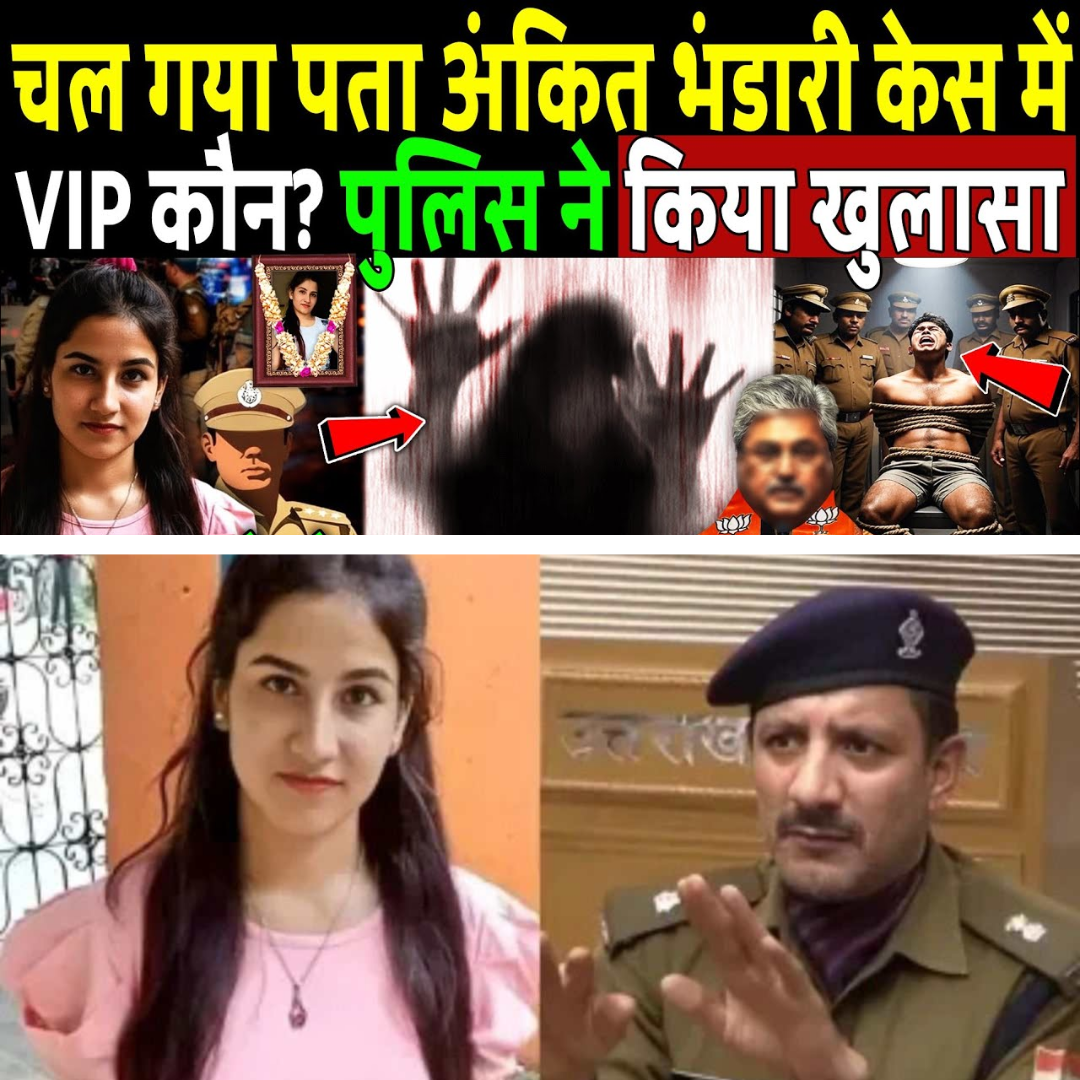
The name Ankita Bhandari once echoed quietly, almost anonymously, in the hills of Uttarakhand. Today, it resonates across the nation as a symbol of unanswered questions, buried truths, and a justice system under intense scrutiny. When news first broke that police had finally revealed the identity of a VIP allegedly linked to the case, it reopened wounds that had never truly healed. For months, the question haunted public discourse: who was the VIP, and why did it take so long to name him?
Ankita was a young woman with simple dreams. Working as a receptionist at a resort near Rishikesh, she represented thousands of young Indians seeking independence, dignity, and a better future. But in September 2022, her sudden disappearance sent shockwaves through her family and community. What initially appeared to be a missing person case quickly spiraled into something far darker. As days passed without answers, whispers began to surface—of pressure, of influence, and of a mysterious “VIP” whose name remained conspicuously absent from official statements.
When Ankita’s body was recovered days later from a canal, the nation stood still. Grief turned into outrage. Candle marches filled the streets. Protesters demanded justice, not just for Ankita, but for every woman silenced by power and privilege. Yet amid the arrests and investigations, one question refused to fade: who was the VIP Ankita was allegedly asked to “entertain,” and why was that identity being protected?
For months, police investigations focused on the resort’s management, and arrests were made. Official statements carefully avoided naming any powerful outsiders. The silence surrounding the VIP only intensified suspicion. Social media erupted with speculation, theories, and anger. Many believed that influence and connections were shaping the pace and direction of the investigation. The absence of a name became louder than any accusation.
Then came the revelation.
According to police officials, the long-speculated VIP was finally identified during the course of the investigation and court proceedings. Authorities clarified that while a “VIP” had indeed been mentioned during questioning, the individual in question was not a high-ranking political figure, as widely rumored, but someone known to the accused. This disclosure, though framed cautiously, sent ripples across the country. For some, it brought relief. For others, it raised even more questions. If the VIP was known, why was the identity withheld for so long? And what role did influence play in shaping the narrative?
The police maintained that the investigation followed due process and that no individual, regardless of status, was being shielded. They emphasized that all evidence was presented before the court and that speculation had only complicated the pursuit of truth. Yet public trust, once shaken, is not easily restored. Many continued to ask whether the truth had been revealed fully—or selectively.
Ankita’s family, meanwhile, remained trapped in grief. Her parents spoke of sleepless nights, of memories frozen in time, and of a daughter who left for work and never returned. For them, the revelation of the VIP was not about headlines—it was about accountability. “We want justice, not stories,” her father said in a statement that resonated deeply with the public. His words reflected a collective exhaustion with half-answers and delayed disclosures.
The case became more than a criminal investigation; it turned into a mirror reflecting society’s deepest fears. The fear that power can silence voices. The fear that women from modest backgrounds are disposable. And the fear that truth often emerges only after relentless public pressure. Each revelation felt less like closure and more like another layer being peeled back from a painful reality.
As debates raged on television studios and online platforms, legal experts weighed in, urging restraint and respect for judicial processes. They reminded the public that courts, not hashtags, determine guilt. Still, the emotional weight of the case made neutrality difficult. Ankita’s story had become personal for millions who saw in her their sister, their daughter, or themselves.
The revelation of the VIP’s identity, while significant, did not mark the end of the story. Instead, it signaled a new phase—one where facts would be tested in court, narratives would be challenged, and the demand for justice would intensify. The question was no longer just who the VIP was, but whether the system would ensure accountability without fear or favor.
As India watched closely, one truth stood undeniable: Ankita Bhandari’s name would not fade into silence. Her case had forced uncomfortable conversations about power, privilege, and the price of speaking up. And as the legal battle continued, the nation waited—hoping that this time, the truth would not remain hidden behind influence and unanswered questions.
As the police disclosure about the VIP surfaced, the focus of the Ankita Bhandari case shifted sharply from grief to scrutiny. What was once a question whispered in public gatherings now became a headline debated across newsrooms and courtrooms alike. The police, facing mounting pressure, stepped forward to defend their investigation, insisting that no powerful individual had been deliberately shielded. Yet the timing of the revelation itself became the center of controversy.
Officials explained that the reference to a “VIP” had been misunderstood and exaggerated over time. According to their statements, the person mentioned during interrogation was neither a prominent politician nor a nationally influential figure, as social media had suggested. Instead, the individual was described as someone personally connected to the accused. This clarification, intended to calm public outrage, had the opposite effect. For many, it felt less like transparency and more like damage control.
Television debates erupted almost immediately. Anchors questioned why such a crucial detail remained ambiguous for months. Legal analysts pointed out inconsistencies in official briefings, noting that the absence of clear communication had allowed speculation to spiral out of control. Every delayed statement, every carefully worded clarification, added to the perception that the truth was being managed rather than revealed. Trust, once fractured, continued to erode.
On social media, reactions were fierce and unforgiving. Hashtags demanding justice for Ankita resurfaced with renewed intensity. Users revisited old videos, leaked chats, and protest footage, piecing together narratives that challenged the official version. Many asked whether the definition of “VIP” had been deliberately softened to protect reputations. Others questioned whether the investigation would have moved faster had Ankita belonged to a more influential family.
The police found themselves in an uncomfortable spotlight. While arrests had been made and charges filed, public confidence remained fragile. Senior officers emphasized that evidence, not public opinion, would decide the case. They warned against trial by media, arguing that emotional outrage should not derail judicial fairness. Yet these appeals struggled to resonate in a climate where delayed justice had become a recurring national fear.
Ankita’s family watched these developments with a mixture of hope and heartbreak. For them, each press conference reopened old wounds. Her mother’s quiet grief contrasted sharply with the loud arguments dominating news studios. “We don’t care who he is called,” a family representative said. “VIP or not, everyone involved must be punished.” That statement cut through the noise, reminding the nation that behind every debate was a life lost.
Civil rights activists and women’s groups also stepped in, reframing the case as part of a larger pattern. They argued that Ankita’s story reflected how power dynamics operate silently, especially when young women in vulnerable jobs are involved. The delayed clarity around the VIP, they claimed, symbolized a system more comfortable with ambiguity than accountability. Protests reignited, not just for Ankita, but for systemic reform.
Meanwhile, court proceedings advanced steadily, though away from the glare of breaking news. Legal documents began to paint a more detailed picture of the events leading up to Ankita’s death. Still, gaps remained—gaps that fueled suspicion and kept public emotions raw. Each hearing became a test of patience for a nation accustomed to unfinished stories.
The revelation of the VIP did not bring closure. Instead, it deepened the divide between official narratives and public perception. The case now stood at a crossroads, caught between law and emotion, facts and faith. Would the judicial process succeed where communication had failed? Or would Ankita’s story join a long list of cases remembered more for controversy than justice?
As the noise grew louder, one thing became clear: silence was no longer an option. Every action, every statement, every delay would be examined under a microscope. The Ankita Bhandari case had evolved into a symbol—of how truth struggles to surface when power, fear, and public outrage collide. And as the nation waited for the next chapter, the demand remained unwavering: justice must not only be done, it must be seen.
As the Ankita Bhandari case moved toward its legal conclusion, the nation found itself confronting an uncomfortable reality: justice is not only about verdicts, but about trust. Court proceedings continued with measured restraint, evidence was examined line by line, and arguments unfolded far from the emotional chaos of television debates. Yet outside the courtroom, the impact of the case refused to fade. It had already reshaped public consciousness.
The police stood by their investigation, reiterating that all facts had been placed before the court without discrimination. Officials emphasized that the term “VIP,” which once ignited nationwide fury, had been clarified within legal boundaries. According to them, no political pressure altered the course of the probe. Still, for many citizens, the damage had already been done. The prolonged silence and delayed explanations had left scars deeper than any official assurance could heal.
For Ankita’s family, the final phase of the case was both a moment of endurance and exhaustion. Years of waiting had stripped grief of its sharp edges, leaving behind a quiet, persistent ache. Her parents continued to attend hearings, carrying photographs of a daughter frozen in time. They spoke less to the media now, no longer seeking sympathy—only closure. “We trusted the system,” her father said softly. “Now we wait for it to prove that trust was not misplaced.”
The broader implications of the case began to take shape. Legal experts described it as a landmark moment that exposed how ambiguity and power can distort public faith in institutions. Women’s rights advocates cited Ankita’s story as evidence of the vulnerability faced by young women working in private hospitality sectors, especially in tourist hubs. Calls for stricter workplace protections, clearer complaint mechanisms, and faster investigative transparency grew louder.
In classrooms, offices, and homes, conversations changed tone. Parents spoke to daughters about safety and silence. Young workers discussed the risks of standing up to authority. The Ankita Bhandari case became more than a headline—it became a reference point, a warning, and a symbol of how easily lives can be overshadowed by influence and delay.
Social media, once fueled by rage, slowly shifted toward reflection. Posts demanding justice were joined by essays questioning systemic failures. The viral outrage cooled, but the memory remained. Many recognized that public pressure had played a crucial role in pushing the case forward, yet also acknowledged its limits. Justice driven solely by outrage, they realized, risks becoming as unstable as the silence it seeks to replace.
As the verdict loomed, expectations remained divided. Some hoped for a ruling that would restore faith in the system. Others feared a conclusion that would deepen cynicism. Regardless of the outcome, one truth had become undeniable: Ankita Bhandari’s death had forced the country to look inward. It exposed the fragile intersection of law, power, and morality—and the cost when transparency arrives too late.
In the end, Ankita’s story is not just about a crime or a controversial “VIP.” It is about a young woman whose voice was lost, and a nation that refused to forget her. Her name continues to echo in courtrooms, protests, and conversations long after the headlines have moved on. Whether justice feels complete or compromised, her legacy endures as a reminder that accountability must never depend on status, and truth must never wait for outrage to surface.
The Ankita Bhandari case may eventually close on paper, but in the public conscience, it remains open—a question, a challenge, and a call to ensure that no life is ever reduced to a footnote hidden behind power and silence.