“Ghar Kab Aaoge” Song Triggers Emotional Public Reaction Ahead of Border 2
The moment the first notes of “Ghar Kab Aaoge” filled the air, something shifted in the room. Conversations fell silent, eyes turned toward the screen, and a strange heaviness settled over everyone listening. This was not just another song from a big-budget film. It felt personal, almost intrusive, as if it was asking a question many people had spent years avoiding. When will you come home? In that single line, Border 2 managed to reopen an emotional wound that never truly heals.
Public reaction to the song has been intense and deeply emotional. Videos circulating online show listeners visibly upset, some wiping away tears, others sitting quietly with lowered heads. There is no dramatic outburst, no loud applause. Instead, there is silence. The kind of silence that speaks louder than words. It is the silence of people remembering fathers, sons, brothers, and lovers who left home in uniform, carrying duty on their shoulders and uncertainty in their hearts.
“Ghar Kab Aaoge” works because it does not try too hard. The melody is restrained, almost fragile, allowing the lyrics to breathe. Sung with aching sincerity by Sonu Nigam and Arijit Singh, the song feels like a conversation between hope and fear. Sonu Nigam’s voice carries maturity and quiet pain, while Arijit Singh brings vulnerability, as if the words are being sung through a lump in the throat. Together, they create a haunting balance that refuses to let the listener remain detached.
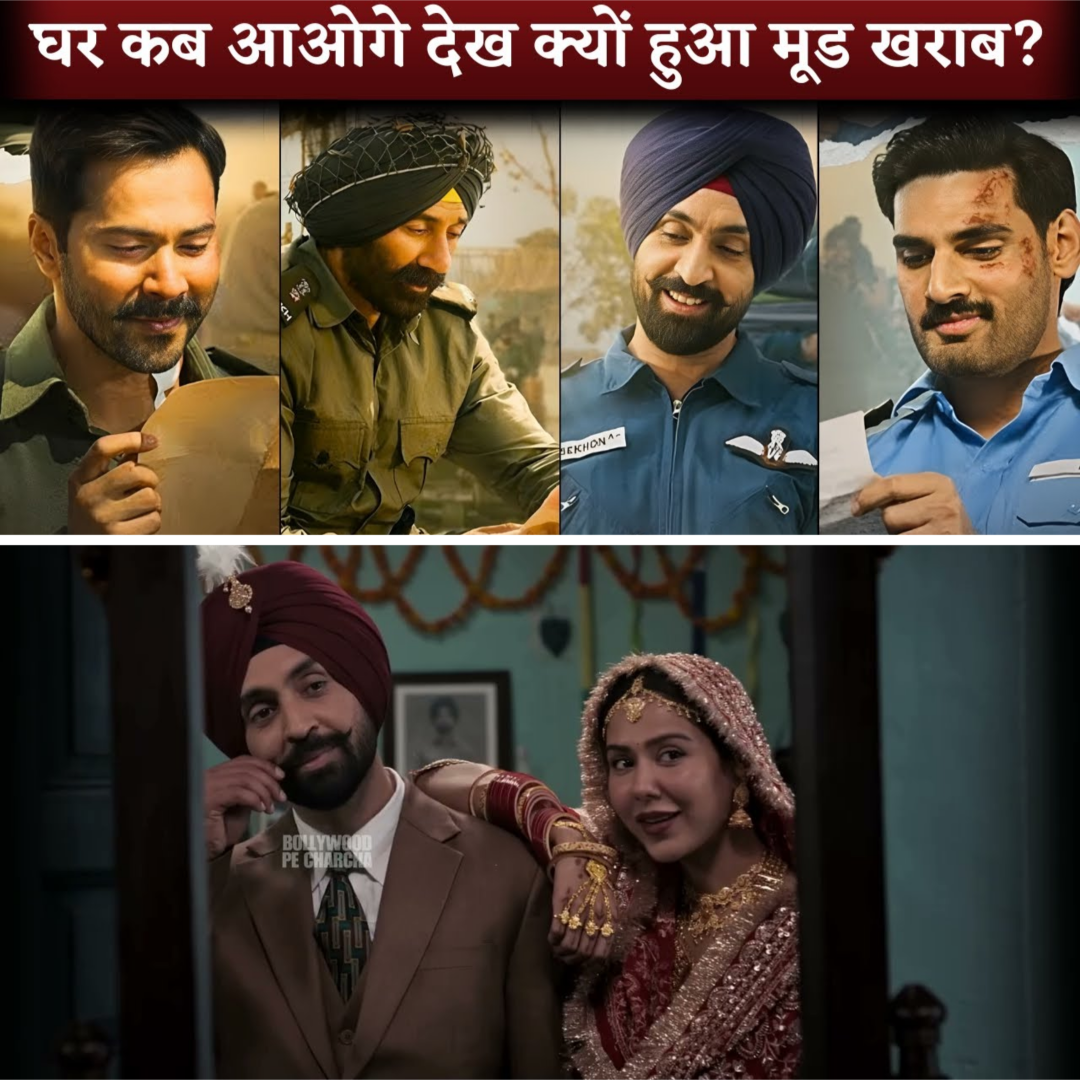
Sunny Deol’s presence in Border 2 adds another powerful layer to the song’s impact. For an entire generation, Sunny Deol is not just an actor. He is a symbol of patriotism, sacrifice, and emotional intensity. His return to the Border universe automatically brings memories of the original film, which left a lasting mark on Indian cinema. When his image is paired with a song like “Ghar Kab Aaoge,” the emotional weight multiplies. Audiences are not just watching a character. They are revisiting a legacy.
What makes the public reaction especially striking is how personal the song feels to people from different walks of life. You do not have to belong to a military family to feel its impact. The theme of waiting is universal. Waiting for someone to return. Waiting for reassurance. Waiting for closure. The song taps into that shared human experience, making it relatable even beyond its patriotic context.
Many listeners have shared that the song reminded them of phone calls that never came, letters that arrived late, and promises that had to be postponed indefinitely. For some, it brought back memories of family members posted far away. For others, it stirred emotions connected to loss, separation, or even migration. This is where “Ghar Kab Aaoge” transcends cinema and becomes a mirror reflecting personal stories.
Social media reactions reveal a pattern. People are not just praising the song. They are sharing memories alongside it. Comments are filled with emotional confessions, stories of loved ones serving on borders, and messages of gratitude mixed with pain. Some viewers admitted they were not prepared for how strongly the song would affect them. Others said they had to stop watching and take a moment to compose themselves.
Border 2 appears to be consciously leaning into emotional realism rather than loud nationalism. “Ghar Kab Aaoge” does not glorify war. It highlights absence. It focuses on the people left behind, on the unanswered questions and the endless waiting that define the lives of soldiers’ families. That choice is resonating strongly with the public, especially in a time when audiences are craving authenticity over spectacle.
The timing of the song’s release has also played a role in its impact. In a world constantly moving forward, filled with noise and distraction, the song forces listeners to pause. It demands emotional attention. Public reaction videos often show people listening without multitasking, without scrolling. Just listening. That alone says a lot about its power.
For many older viewers, the song feels like a bridge between past and present. It brings back memories of the original Border, a film that was deeply rooted in emotion and patriotism. At the same time, the fresh voices of Sonu Nigam and Arijit Singh make it accessible to younger audiences. This generational connection has helped the song reach a wider emotional audience.
Industry insiders believe that “Ghar Kab Aaoge” may become one of the most talked-about songs of the year, not because of charts or numbers, but because of its emotional footprint. It is already being described as the soul of Border 2, a track that defines the film’s emotional core even before its full release.
What stands out most in public reactions is not just sadness, but respect. People seem to be listening with a sense of responsibility, aware that the song represents real emotions lived by real families. There is admiration for the restraint shown by the makers, for choosing subtlety over drama. In an era of fast content and instant gratification, this song asks for patience, empathy, and emotional honesty.
As Border 2 prepares to reach audiences worldwide, “Ghar Kab Aaoge” has already done something rare. It has united listeners in shared vulnerability. It has reminded people that behind every uniform is a home waiting, and behind every act of duty is a family living with unanswered questions.
This is only the beginning of the conversation the song has started. Its true impact will continue to unfold as more people hear it, feel it, and attach their own stories to it. For now, one thing is clear. “Ghar Kab Aaoge” is not just being heard. It is being felt, deeply and collectively, by a public that was not prepared, but profoundly moved.
As the initial wave of emotion settled, the conversation around “Ghar Kab Aaoge” began to deepen rather than fade. What started as tearful public reactions slowly turned into thoughtful discussions about why this song hurt in such a familiar way. People were no longer just reacting in the moment. They were reflecting. The song had opened a door to memories many did not even realize they were carrying.
Across social media, viewers began revisiting the song again and again, each time hearing something new. The lyrics felt simple, yet with every listen they grew heavier. The question at the heart of the song was never really about time. It was about uncertainty. It was about not knowing if the wait would end today, tomorrow, or ever. That lingering doubt is what made the public reaction so intense and so personal.
Many listeners pointed out that the song does not rely on visuals or dramatic orchestration to make its point. Even without watching the screen, the emotion is clear. Sonu Nigam’s voice feels like that of someone who has lived through years of waiting, while Arijit Singh sounds like someone still trapped inside it. Their voices do not compete. They converse. One sounds like reassurance, the other like longing, and together they create an emotional tension that mirrors real life.
The association with Border 2 only amplified this effect. The Border franchise has always carried emotional weight, but this time the makers seem more focused on what happens away from the battlefield. “Ghar Kab Aaoge” shifts the lens from bravery in combat to bravery in waiting. The public reaction suggests that this choice has struck a nerve. People are tired of glorified narratives. They want stories that acknowledge pain without dressing it up.
Sunny Deol’s presence continues to play a crucial role in how the song is being received. For many, his face alone carries decades of emotional memory. Viewers who grew up watching him roar patriotic dialogues now see him surrounded by silence and longing. That contrast is powerful. It reminds audiences that strength is not only about fighting, but also about enduring separation without breaking.
As more reaction videos surfaced, a pattern became clear. Younger viewers were discovering Border for the first time, while older audiences were reliving it through a more mature lens. Parents shared the song with their children, explaining what it meant to wait for news, to live with fear disguised as hope. In this way, “Ghar Kab Aaoge” became more than a film song. It became a conversation starter across generations.
Some reactions were especially heartbreaking. Viewers from military families spoke about how accurately the song captured their everyday reality. They talked about birthdays celebrated without fathers, festivals marked by absence, and phone calls that became lifelines. For them, the song did not feel like fiction. It felt like a voice finally acknowledging what they live with silently.
At the same time, civilians with no direct connection to the armed forces also found themselves affected. Many admitted that the song made them think about loved ones living far away, about emotional distances created by work, migration, or circumstances beyond control. This universality is what has given “Ghar Kab Aaoge” its lasting power. It speaks about waiting in its purest form, stripped of labels.
Critics have also praised the song for its restraint. In an industry often accused of emotional manipulation, this track trusts the audience to feel without being told how. There are no forced crescendos, no unnecessary drama. The emotion flows naturally, which is perhaps why public reactions feel so raw and unfiltered. People are not performing sadness. They are experiencing it.
As Border 2 inches closer to its release, expectations continue to rise. The song has set a tone that the film will now be measured against. Audiences are hoping for a story that respects the emotional honesty introduced by “Ghar Kab Aaoge.” The public reaction suggests that viewers are ready for a film that values silence as much as dialogue, and emotion as much as action.
What remains most striking is how long the feeling lingers after the song ends. Many viewers have said that even after the music stops, the question stays with them. It echoes during the day, resurfaces at night, and quietly demands attention. That lingering presence is the mark of something meaningful.
“Ghar Kab Aaoge” has moved beyond being just a song release. It has become an emotional marker for Border 2, shaping how the public approaches the film even before watching it. The reactions are not just about appreciation. They are about connection, memory, and unresolved longing.
And perhaps that is why the public looks so upset, so quiet, and so deeply affected in those reaction videos. Because the song does not offer answers. It only asks a question that millions of people, in one form or another, have asked at some point in their lives. When will you come home?
As days passed, the emotional response to “Ghar Kab Aaoge” evolved from immediate tears to reflective conversations. The song had settled into the public consciousness not just as a melody, but as an emotional experience that stayed with listeners long after the notes faded. People were no longer simply reacting—they were connecting, remembering, and sometimes even grieving quietly, realizing that the song mirrored their own moments of waiting, longing, and uncertainty.
The public reaction videos continued to circulate, showing subtle gestures rather than dramatic displays—quiet sobs, bowed heads, and moments of stillness. These reactions revealed how deeply the song resonated, even among those who had no personal connection to military life. Its lyrics and tone struck a universal chord about absence, patience, and the invisible weight of waiting. The line “Ghar Kab Aaoge” became more than words; it became an emotional question that people could place into their own lives, whether thinking of distant loved ones, missed reunions, or long-held separations.
Critics noted that the brilliance of the song lies in its restraint. Unlike typical film tracks designed to elicit instant reaction with bombastic orchestration, this song relies on subtlety. The vocals of Sonu Nigam and Arijit Singh provide an emotional counterpoint, one soothing, one aching, creating a layered narrative of longing and hope. Sunny Deol’s onscreen presence reinforces this feeling, his stoic yet vulnerable portrayal grounding the song in lived emotion rather than cinematic exaggeration. The public seems to have instinctively understood this, responding not with applause but with empathy and introspection.
Interestingly, the song has sparked conversations about the broader emotional realities of waiting and separation. Parents shared how it reminded them of children far from home, while young adults spoke of friendships and love tested by distance. Families connected through military life described how the song reflected their reality. Even viewers with no direct connection found themselves reflecting on moments of absence in their own lives. The song’s appeal lies in this universality: it does not belong to a single story, but to anyone who has ever waited for someone they love.
The public’s reaction has already shaped the expectations for Border 2. Audiences are anticipating a film that respects the depth of emotion introduced by the song. Social media discussions reveal that viewers now look for authenticity and subtlety rather than spectacle, appreciating how the film’s narrative mirrors the honesty of the song. The quiet intensity of reactions suggests that this track has become the emotional heart of the film before it has even fully reached theaters.
Ultimately, “Ghar Kab Aaoge” has done more than entertain—it has evoked shared human experience, uniting viewers through memory, longing, and reflection. Its impact goes beyond charts or trends. The song has reminded audiences that true emotional resonance comes not from volume or drama, but from honesty and empathy.
As Border 2 moves toward release, the song continues to linger in the public imagination. People replay it not just for melody, but for emotion. It serves as a quiet reminder that while films may end, and life moves forward, feelings of waiting, love, and connection remain timeless. The public’s response is a testament to the power of music to reach across screens, hearts, and generations, making “Ghar Kab Aaoge” more than a song—it has become a moment, a question, and a shared experience that will echo long after the movie credits roll.