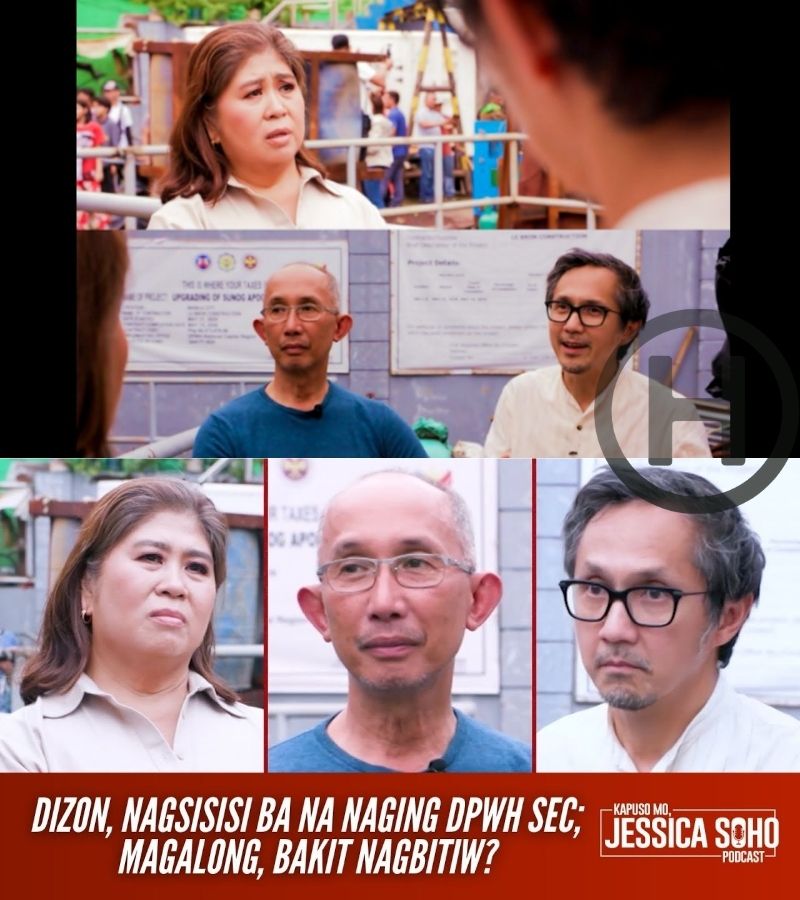
Dizon, Does He Regret Being DPWH Secretary? Why Magalong Resigned — Insights from Kapuso Mo, Jessica Soho Podcast
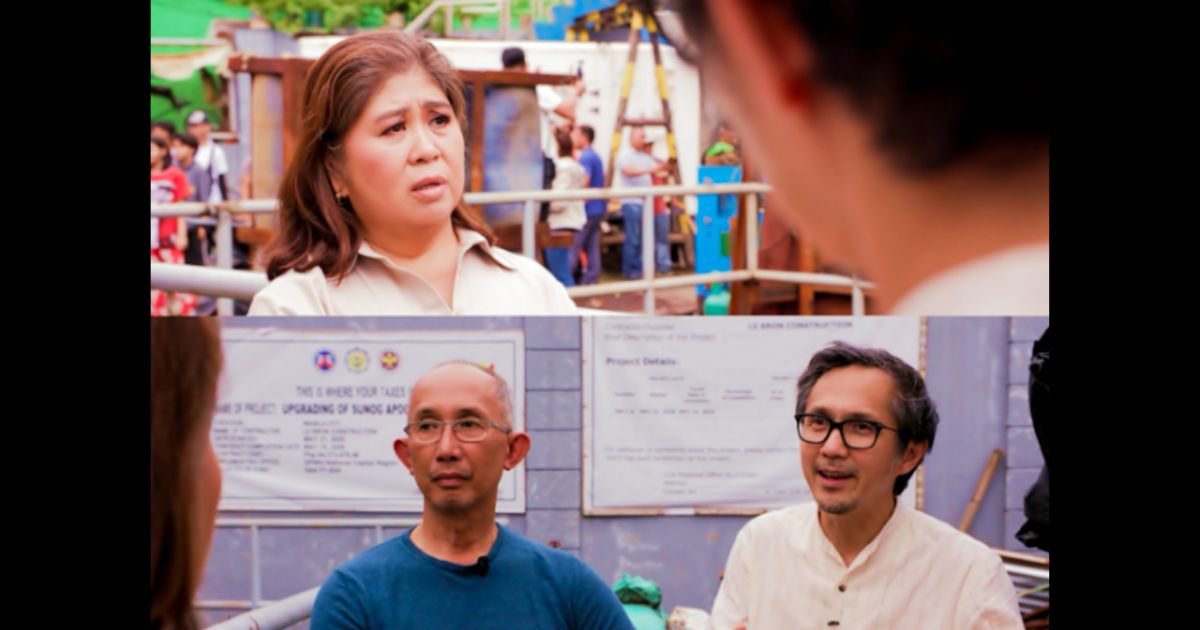
Dizon, Does He Regret Being DPWH Secretary? Why Magalong Resigned — Insights from Kapuso Mo, Jessica Soho Podcast
DPWH leadership, infrastructure reform pressures, and institutional integrity take center stage in a candid public discussion
Published: January 13, 2026
INTRODUCTION
In a rare and candid conversation on the Kapuso Mo, Jessica Soho Podcast, Department of Public Works and Highways (DPWH) Secretary Vince Dizon and Baguio City Mayor Benjamin “Benjie” Magalong publicly reflected on their leadership experiences, including whether Dizon regrets accepting the tough DPWH post and the reasons behind Magalong’s resignation from a key advisory role.
Their insights shed light on the intense political, administrative, and ethical pressures that come with public infrastructure reform — especially amid one of the most scrutinized government efforts in recent Philippine history. The discussion not only attracted national attention but also sparked broader debates around leadership accountability, governance reform, and institutional credibility.
TABLE OF CONTENTS
-
Dizon’s Appointment to DPWH
The Flood Control Reform Pressures
Does Dizon Regret the Appointment?
The Independent Commission for Infrastructure (ICI)
Magalong’s Role in the ICI
Why Magalong Resigned
Dizon’s View on Magalong’s Departure
Public and Political Reception
Implications for DPWH and Governance
Lessons in Leadership and Institutional Integrity
SECTION 1: DIZON’S APPOINTMENT TO DPWH
Vince Dizon was appointed Secretary of the Department of Public Works and Highways in late 2025 after public uproar over alleged irregularities and controversial projects involving flood control infrastructure. The appointment was meant to signal a fresh start and a more robust public accountability stance for a department historically associated with large budgets and complex contracting chains.
Dizon’s mandate included reviewing projects, ensuring compliance with standards, and pushing internal reforms aimed at restoring confidence in the government’s infrastructure agenda. He also worked closely with oversight bodies and independent commissions tasked with reviewing alleged malpractices in public works.
SECTION 2: THE FLOOD CONTROL REFORM PRESSURES
Upon stepping into the DPWH leadership role, Dizon was immediately faced with a high‑pressure environment: calls for transparency, public criticism of past projects, and political scrutiny from both supporters and critics of reform. The “flood control controversy,” as it became known, delved into how contracts were awarded, standards were enforced, and oversight mechanisms were implemented.
This environment put immense strain on Dizon and the department, with expectations that structural issues — years in the making — must be rectified swiftly and visibly to regain public trust.
SECTION 3: DOES DIZON REGRET THE APPOINTMENT?
During the podcast interview, the host asked Dizon a direct question: Does he regret taking on the DPWH Secretary position amid such controversy and public pressure?
Rather than offering a simple yes or no, Dizon framed his response around duty, responsibility, and commitment to reform. He acknowledged the enormous challenges and the personal stresses that came with the job, but insisted that serving in difficult roles — especially when public trust is at stake — is part of leadership in public service.
His response emphasized that regret would be misplaced when one is focused on institutional duty rather than personal comfort. In essence, Dizon expressed that while the job is incredibly demanding and has come with personal sacrifice, he views the appointment as his responsibility to the public rather than a mistake.
SECTION 4: THE INDEPENDENT COMMISSION FOR INFRASTRUCTURE (ICI)
As part of the reform strategy in the infrastructure sector, the government established the Independent Commission for Infrastructure (ICI) — a body tasked with reviewing public works projects, examining alleged irregularities, and making recommendations for legal, administrative, or policy action.
The ICI was structured to be transparent, impartial, and accountable, with the aim of investigating problem areas without political interference. It was seen by many as a cornerstone of meaningful reform, intended to complement efforts within the DPWH and other oversight agencies.
SECTION 5: MAGALONG’S ROLE IN THE ICI
Benjamin “Benjie” Magalong, known nationally for his leadership on public safety and anti‑corruption initiatives, was appointed as special adviser to the ICI. His involvement was widely interpreted as a signal of seriousness in the government’s effort to confront infrastructure problems.
Magalong’s reputation for principled leadership and integrity was seen as an asset to the commission’s credibility, especially given the sensitive nature of the challenges the ICI was tasked to investigate.
SECTION 6: WHY MAGALONG RESIGNED
One of the most anticipated moments in the podcast involved Magalong’s explanation for why he resigned from his advisory role to the ICI.
Magalong stated that his decision was rooted in principle and concern for institutional integrity. He explained that while he believes in the mission of the commission, he also wanted to avoid any perception — accurate or not — that might compromise the ICI’s independence. Rather than allowing political interpretations of his role to overshadow the work, he stepped aside to protect the commission’s credibility.
His resignation, he emphasized, was not an indictment of the work itself, but a choice made so that the ICI could operate without questions about internal influence or perceived bias.
SECTION 7: DIZON’S VIEW ON MAGALONG’S DEPARTURE
Dizon acknowledged Magalong’s resignation with respect, expressing that while it was unfortunate, it upheld the spirit of institutional integrity and accountability that reform advocates seek.
Dizon emphasized that Magalong’s decision was a reflection of high ethical standards, and reiterated that public confidence in institutions — especially ones tasked with oversight — must always be safeguarded, even at the cost of losing a respected leader from direct involvement.
SECTION 8: PUBLIC AND POLITICAL RECEPTION
The podcast conversation drew varied reactions:
Supporters of reform praised Dizon’s willingness to speak openly and Magalong’s principled stance.
Critics questioned whether reforms are sufficient and whether institutional change can occur without disrupting entrenched practices.
Political analysts highlighted the importance of transparency in leadership decisions like resignations, appointments, and strategic direction.
The discussion also triggered broader public debate about how infrastructure projects are managed and how accountability mechanisms can be made more effective.
SECTION 9: IMPLICATIONS FOR DPWH AND GOVERNANCE
The reflections provided in the podcast have larger implications for how institutions manage reform:
Leadership under pressure requires clarity of purpose and transparency of motive.
Public trust is fragile and must be actively protected through actions, not merely statements.
Independent oversight bodies must operate with visible impartiality to sustain credibility.
The conversation highlighted the reality that reform is as much about leadership choices and ethical clarity as it is about policies and procedures.
SECTION 10: LESSONS IN LEADERSHIP AND INSTITUTIONAL INTEGRITY
Several lessons emerge from the interview:
Taking on difficult roles is part of responsible public service and should not be judged solely by outcomes.
Upholding institutional integrity may require personal sacrifice, as demonstrated by Magalong’s resignation.
Sustainable reform depends on structures that resist politicization and remain accountable to the public.
The podcast discussion serves as a reminder that governance challenges are complex and often involve trade-offs between personal ambition and institutional credibility.
CONCLUSION
The Kapuso Mo, Jessica Soho Podcast offered a rare and important window into the pressures of high‑level government leadership during a period of intense public scrutiny.
While Vince Dizon does not categorically express personal regret for accepting the DPWH portfolio, he contextualizes his service as a duty in challenging circumstances rather than a personal misstep. Meanwhile, Benjie Magalong’s resignation reflects a deliberate choice to preserve the credibility of an independent commission — highlighting that leadership sometimes means stepping back to protect institutional integrity.
Their combined insights underscore a deeper truth about governance: that transparency, ethical leadership, and accountability are not just policy goals but lived responsibilities for public servants in high‑stakes roles.
RELATED ARTICLES
DPWH Reforms and Public Accountability: Navigating Controversy and Change
Independent Oversight Bodies: Balancing Impartiality and Public Trust
Leadership Under Fire: Ethical Decision‑Making in Government Service
Public Infrastructure Policy and Institutional Integrity in the Philippines